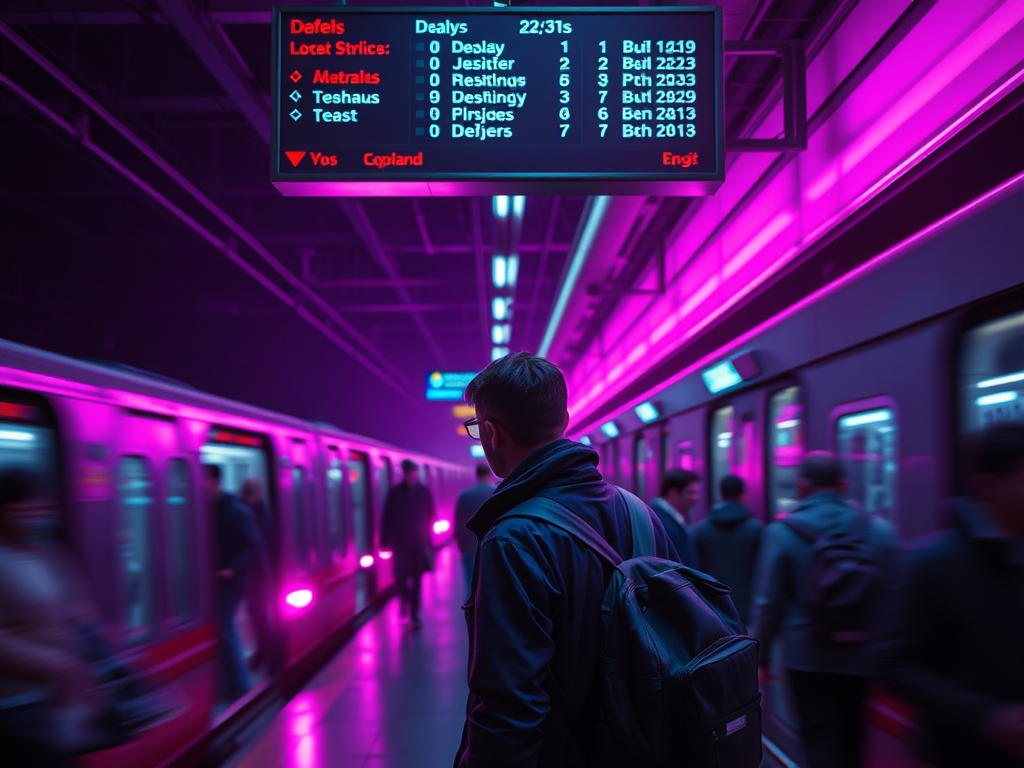
Commuting is not just about travel; it is about waiting.
Waiting for the bus, waiting for the train or waiting for the Uber driver.
Every day we surrender our time, our energy and sometimes our dignity to transport networks and social structures that are beyond our control.
This is especially the case for those of us who work in central business districts, where we are faced with an endless act of waiting, stretching our patience and weakening our sense of agency.
But for some, commuting is a distant concern. It is a minor inconvenience for those who live in leafy, inner-suburban locations, close to work, with an obligatory office parking space. Their proximity to work is a luxury that offers greater control over their time and workday.
It is perhaps unsurprising that those with the shortest commutes often have the most flexibility surrounding their work lives, avoiding long stretches of congestion, overcrowded trains and inaccurate timetables.
They live in a world where time is more fully their own.
For many, commuting is a daily reminder of how little control they have over their time. It is not just about getting from home to work, it is about surrendering to larger forces, and always operating at the convenience of other people.
We wait because we have no alternative.
Public transport forces us into rigid schedules, where every delay or overcrowded train becomes another reminder of our powerlessness. It reinforces that the choice to drive, instead of take the bus, is a privilege afforded to some, not all.
For many, the act of commuting is about navigating, and reacting to, the unpredictability of systems. Waiting for the bus that is late, the train that is overcrowded or the traffic that seems to never clear.
In these moments, power rests with the system, with the infrastructure that dictates how and when we move. It reminds us of our lack of control.
Those who can leave work early are unaffected, while the rest of us are left waiting.
In the quiet of this waiting, we feel small and vulnerable. We come to realise that our lives, and our time, are not ours to control.
We are subject to the whims of traffic, timetables and design decisions that have been made by others.
Commuting is not just about moving through space; it is about the power we surrender to the relentless rhythm of waiting.
It is the quiet reminder that much of our time is no longer our own.

 Jack Bilson On...
Leave a comment