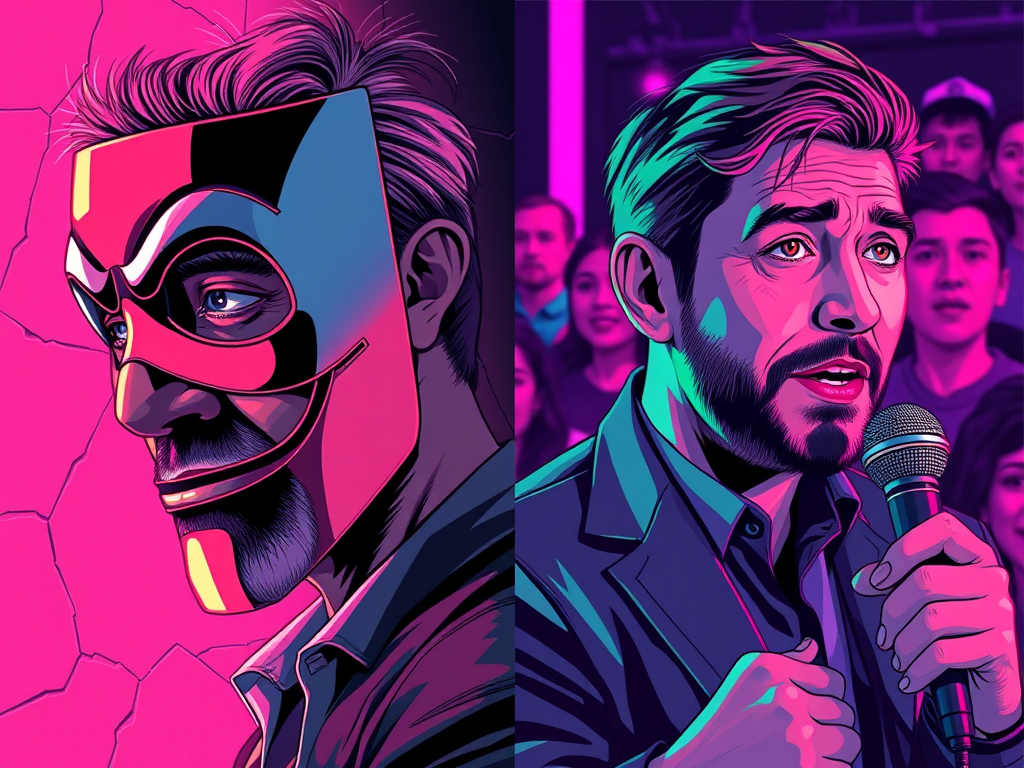
Humour is often celebrated for its ability to uplift, but it is also a powerful tool for avoidance, shielding us from any confrontation with discomfort, reinforcing harmful norms.
It lets us sidestep responsibility and the hard work of confronting real issues.
It becomes a shield that allows us to mock, deflect and entertain, without ever truly engaging.
We continue to see this in the ableist, homophobic or misogynistic jokes made predominantly by boys and men, which are a kind of ritualised banter intended to mask vulnerability.
Such jokes deflect from deeper truths, offering a socially accepted escape from hard conversations about emotional pain, fear and uncertainty.
Rather than face feelings that challenge the pressure to be tough and unemotional, humour becomes a way to reassert those very norms, even as they constrain and harm.
As this suggests, when people use humour and irony to make light of serious matters, they are not just seeking to be funny, they are also seeking to control the narrative.
They demand laughter instead of reflection, and in so doing, avoid vulnerability, accountability and the discomfort of addressing real problems.
But at its best, humour should challenge power.
It should hold up a mirror to the absurdities of the world and expose uncomfortable truths.
But when humour becomes a default response in difficult conversations, it becomes a tool of avoidance, numbing the pain so that we might laugh instead of act.
It creates emotional distance from the very issues that deserve our attention, leaving us with a hollow, reductive way of engaging with the world.
Even this has limits, as seen in the humour used by celebrities to mock their own fame with ironic detachment.
They laugh at the very system that elevates them, saying, “I see it, I know it’s absurd, but I’m still here.”
We laugh with them, showing we get the joke, deluding ourselves that the joke is on us.
We reward their self-awareness while never demanding they challenge the system that gives them everything.
It is protest wrapped in a punchline, but a protest that never intends on changing anything.
This kind of humour is predominantly used as a shield, not a sword, offering a protective barrier between the joker and the discomfort of real engagement.
It numbs instead of confronts.
If we are serious about change, we must stop laughing and start listening.

 Jack Bilson On...
Leave a comment